I eat bread for breakfast, and I buy my bread at a nearby convenience store. The price has risen recently and one loaf costs 74 pesos (about 160 yen), so I think I am eating very expensive bread in the Philippines. The president is my friend, so I have to support him.
I have decided to pay for my purchases from my saved coins, so I have been counting and preparing my coins from the beginning. This morning, I went to a nearby convenience store to buy my favorite bread, but they didn’t have any, probably because they were sold out. I was a little disappointed, because I even counted the coins and prepared them.
I thought about buying some other bread, but decided to walk to another convenience store. When I think about it, it’s so convenient to have three or four convenience stores within walking distance of each other. I guess there are people in the world who have to walk long distances every day to carry water. Compared to that, it’s nothing.
I think that once people get used to the convenience of life, they tend to take it for granted. I guess that’s just the way it is, but this morning’s incident made me think that we shouldn’t forget to be grateful for the convenience of our world.
I think I drink at least two cups of coffee a day. One in the morning and one in the afternoon. I don’t drink it to avoid sleepy, I drink it just to enjoy the taste and aroma of coffee. Some people say that coffee helps them prevent from sleep, but it doesn’t have that effect on me at all. Sometimes I wonder if my body is not functioning very properly.
You want to taste high quality coffee with elegance, don’t you? When I was living in Tokyo, I remember buying beans from stores that roasted by themselves. I think I was most fond of Yanaka Coffee in Higashi-Ginza.
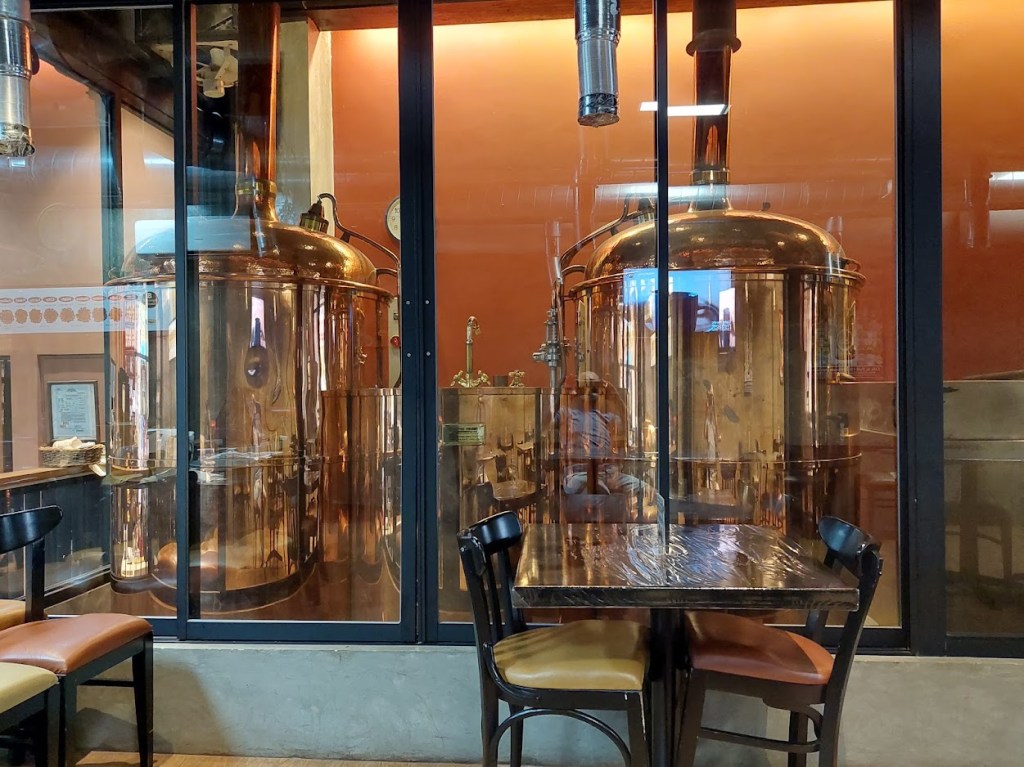
Now, in the Philippines, where I am currently living, “Coffee Tonya” from Yokohama has opened a shop in Makati, selling green coffee beans from all over the world, and they roast them after you order. While waiting for the coffee to be roasted, you can enjoy the coffee for free, which makes you feel like you are getting a great deal. I don’t know if this is the best coffee shop in Manila or the Philippines, but I think it’s one that I would recommend to anyone who cares about coffee. The photo shows the inside of the store.
You can choose from 8 roast depths and 17 grind levels. Of course, if you have a coffee mill, you can also choose not to grind. I don’t think there are many stores in the Philippines that sell coffee beans in such a genuine manner.
To be honest, I don’t have a good enough sense of taste to recognize the differences in coffee beans depending on their price. At the store, they indicate the differences in acidity, sweetness, and other characteristics of each bean, but I don’t have the palate to distinguish the differences. However, I do know that roasting and grinding can make a big difference in the quality of the coffee. Also, if the brewing process is messy, you will not be satisfied with the coffee no matter how you try. I think the most important thing is to brew it with care and attention.
It is strange that blogging about coffee in this way makes me want to drink coffee irresistibly. Coffee goes well with sweets and nuts, but let’s try drinking coffee with cheese. I also love tea, but am I the only one who thinks that sencha and black tea don’t have as many options for “accompaniments” as coffee does?
Jollibee is the most famous fast food in the Philippines. I think it is also famous for the fact that McDonald’s can’t take the top spot as a fast food in the Philippines. An overseas Chinese named Tony Tan Caktiong started this chain restaurant.
When you make a birdie in golf, it is common practice to add 100 pesos (just over 200 yen) to the tip for the caddy. With this, the caddy goes to Jollibee. That’s why birdies are sometimes referred to as jollibees. Totally off topic, but sometimes the bunker is called Boracay (one of the best beach resorts in the Philippines).
They also sell hamburgers, but I think their main products are chicken set meals rather than a hamburger store. Chicken and rice is the main set meal, but there is also a chicken and spaghetti set meal. There are many variations, such as adding soup or dessert. I also go there sometimes, but they don’t sell coffee (maybe some stores do), so I wish they would sell hot coffee.
Jollibee also operates Chowking and other familiar fast food chains in the Philippines, such as Chowking’s Chinese (which I honestly don’t like), Greenwich’s pizza (which I think is pretty good), and Red Ribbon’s cakes (which I use for birthday celebrations). ), Greenwich’s pizza (I think it’s pretty good), Red Ribbon’s cake (I use it for birthday celebrations, etc.), and so on. The following is an excerpt from the company’s disclosure document.
以下ディスクロージャーより抜粋/Excerpt from the company’s disclosure document
Jollibee Foods Corporation(JFC)は、1978年1月11日に設立され、「Jollibee」、「Chowking」、「Greenwich」、「Red Ribbon」、「Mang Inasal」、「Yong He King」、「Hong Zhuang Yuan」、「Burger King」、「Highlands Coffee」、「PHO24「Hard Rock Cafe」, 「Dunkin’ Donuts」、「Smashburger」、「Tim Ho Wan」、「Tortas Frontera」「 The Coffee Bean & Tea Leaf」などの商品名で、クイック・サービス・レストラン(QSR)を開発、運営、フランチャイズしています。
Jollibee Foods Corporation (JFC) was incorporated on January 11, 1978. The Company’s principal business is the development, operation and franchising of quick service restaurants (QSRs) under the trade names “Jollibee”, “Chowking”, “Greenwich”, “Red Ribbon”, “Mang Inasal”, “Yong He King”, “Hong Zhuang Yuan”,”Burger King”, “Highlands Coffee”, “PHO24”, “Hard Rock Caf‚”, “Dunkin’ Donuts”, “Smashburger”, “Tim Ho Wan”, “Tortas Frontera”, “The Coffee Bean & Tea Leaf” and “Panda Express”.
By the end of 2020, there were 1,184 Jollibee stores nationwide, of which 711 were franchised and 473 were Company-owned. On international operations, Jollibee had 294 stores with 46 stores in the US, 14 in Canada, one in Guam, two in Italy, three in United Kingdom, 141 in Vietnam, 18 in Brunei, 10 in Hong Kong, 11 in Singapore, one in Macau, one in Malaysia and 46 in the Middle East.
As for overseas expansion, they are first targeting Filipinos who are active around the world. They have been talking about expanding overseas to Japan for a long time, but so far it doesn’t seem to be happening, which is a shame. I was so happy when I found Jolliebee in New York that I took a picture of it.
The Coffee Bean & Tea Leaf は鳴り物入りで日本進出したのを覚えていますが、今は風前の灯のようですね。現在、このアメリカのロスを本拠とするチェーンはJollibeeの傘下に入っているようです。フィリピンでもたまに行きますし、シンガポールでもお世話になっていました。
I remember when The Coffee Bean & Tea Leaf made a splash in Japan, but now it seems to be winding down. The L.A.-based chain now is under the umbrella of Jollibee. I go there occasionally in the Philippines, and was also a customer in Singapore.
コロナ禍収束により、各ジョリビー店舗がお客さんの笑顔で一杯になること祈念しています。
I pray that the Covid19 pandemic will be resolved and that each Jollibee restaurant will be filled with the smiles of customers.
I believe that ramen was originally brought to Japan from China. The first Chinese restaurant in Japan, “Rai Rai Ken” opened in 1910. According to Wikipedia, this is the first year of ramen was enjoyed by ordinal people in Japan. After that, the development of instant ramen was done by Yasufuku Ando around 1958 (Showa 33). I think the invention of instant noodles, including the Cup Noodle, was a stroke of genius.
Ramen is an indispensable part of Japanese food culture, and there are about 25,000 ramen restaurants in Japan. This is the number of registered ramen stores only, and if you consider Chinese restaurants that serve ramen, the number of ramen stores would be about double that. I tried to find out how many kinds of bagged ramen and cup noodles there are, but there seems to be no such statistics.
I have covered pre-packaged food and frozen foods in my previous blogs, instant noodles are a genre that comes conveniently when you want to eat easily. Since cup noodles lack vegetables, I prefer to eat instant noodles in bags.
Lao’s Yuzu Shio, Tonkotsu Shoyu, and Miso are the strongest trio in my opinion. I add various vegetables that I have left over. I guess I should match them with the soup, but I don’t care about that.
It may be technically difficult, but is it possible to add salt (salt content) to instant ramen by myself? If so, I would be happy to make my own low-sodium ramen. There are cases which only the oil is packaged separately, so it may already be available in the market.
Yesterday, I wrote a blog about pre-packaged foods, and today, I’d like to talk about frozen dumplings. Dumpling is best enjoyed with beer for lunch on weekends. Since I work from home and have online meetings, I don’t have to worry about the smell of garlic even on weekdays, but I still can’t stop drinking beer when I eat dumpling. Also, I think dumpling is not enough for dinner.
I heard that Ajinomoto’s frozen gyoza was served at the Tokyo 2020 Olympics/Paralympics village and became a very popular topic. When I lived in Japan, I could easily eat dumpling at ramen shops. Oshima Ramen’s bite-sized gyoza was really delicious, and I remember it even when I am writing this blog. I also went to Kamata. There are famous dumpling restaurants I miss them.
In the Philippines, we, Japanese still eat dumplings. Everyone loves them at Japanese restaurants and golf courses. They may be tasty, but I don’t think they are at the same level as the ones in Japan. In Manila, there are many authentic Chinese restaurants now, and I think the level of boiled dumplings is quite high. I’m going to try various dumplings in the vicinity of Manila. I don’t know when it will be, I’m going to call it “Manila Dumplings Ranking” and write about it in my blog.
There are about four Japanese grocery stores in my neighborhood that sell pre-packaged curry, etc. You can also get frozen foods there. Of course, there are also frozen foods at nearby supermarkets, but I don’t think we can find frozen foods made by Japanese manufacturers there.
Now, the Ajinomoto baked gyoza in the photo is as good as it gets, boasting the highest sales in Japan. If you follow the instructions exactly, the result will be just as you expect. How can you make it work like that without using water or oil, just baking? The packaging also shows a lot of care. The taste is also very impressive. I feel that they have done a lot of research. I think there must have been a lot of trial and error in the research and development of this product. In Manila, it costs less than 500 yen, which is more than double the price of buying it in Japan, but considering the need to transport it frozen, I don’t think it’s a bad idea.
Like yesterday’s pre-packaged food, I believe that Japanese frozen foods are definitely the best in the world in terms of quality. I have nothing but respect for Japanese food manufacturers who make it easy and quick, while still pursuing deliciousness.
It seems that Japan is the world’s largest consumer of pre-packaged foods, by far. In 2020, Japan produced 388,000 tons or 59.37 million boxes of pre-packaged foods (from the website of the Japan Canned and Bottled Pre-Packaged Foods Association). I can’t imagine the weight, but I think the number of boxes is much higher, but it’s the Association’s figures, so it must be right.
How much pre-packaged foods did I consume in 2020? If I had one a week, I would have eaten 52 boxes, or so it seems. Based on the above, Japanese people consume only 0.5 boxes per year, so I am clearly consuming more than the average Japanese person. For a lonely person who lives alone, pre-packaged foods and instant noodles are a must.
レトルト食品には様々な長所ありますが、何と言っても以下の3点だと思います。
(1)短時間で簡単に調理できる。電子レンジで3分っていうのは助かる。
(2)一回分使い切り。
(3)長期間の保存(1年から2年)が常温で可能。
Pre-packaged foods have many advantages, I think the most important advantages are as below.
(1) Quick and easy to cook. 3 minutes in the microwave is very helpful.
(2) Use only one portion at a time
(3) Can be stored for a long period of time (1 to 2 years) at room temperature.
As I often play golf early in the morning, bread for breakfast doesn’t give me much energy, however I can’t spend too much time on breakfast, so I often eat prepackaged curry and frozen rice in the microwave. Also, when I work from home and don’t have enough time for lunch, I often eat them (as I did today).
Pasta sauces in jars are also good, but many of them are sold with about four servings in one jar. I guess it’s for family use. Once I open the package, it doesn’t last long, so I have to eat pasta almost every day for that. If I am going to eat pasta anyway, I prefer to change the flavor. Even though I know it is relatively expensive, the pre-packaged pasta sauce is very useful.
I did some research on pre-packaged foods and found that Sweden was the first country in the world to commercialize them (around 1955). In the U.S., it seems that pre-packaged foods were developed for space food before that. However, it is not so popular in Europe and the U.S., which is a wonder. From now on, I think Japanese food companies will have a chance to produce both convenient pre-packaged foods for daily use and high quality ones that no one would think of as pre-packaged foods.
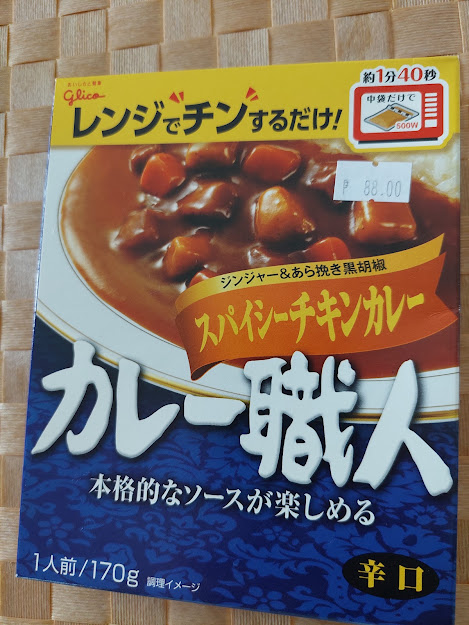
Here in Manila, there are stores that sell Japanese food. I tend to buy a lot of pre-packaged curry. They are usually sold for about 200 yen, which is expensive compared to the one in Japan. It is rare to see pre-packaged foods with a sense of luxury. That’s why sometimes when I go back to Japan, I buy high quality one for myself or as a souvenir. I admire the manufacturers who are able to achieve such high quality in pre-packaged foods.
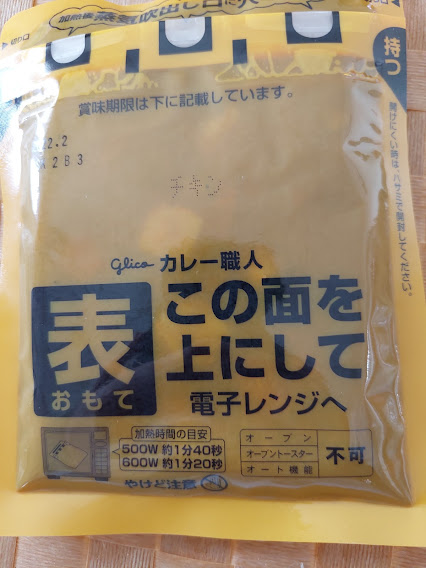
It is a pre-packaged food that is highly valuable as an emergency food. It also continues to evolve in many ways. My preferred pre-packaged curry is the one that can be put in the microwave straight from the bag. I think it is better to pour the curry on top of the warmed rice than to put the curry in a bowl and then heat it up and throw the rice in there.
As one of Japan’s world-class food cultures, it would be great if pre-packaged foods could raise their status even higher and become more useful in the world.
I have discussed Moringa twice in my blog. There is no arguing that it is rich in nutrients. If you haven’t heard of it yet, please Google it. You can find out “Miracle trees” and “Superfoods” etc. However, I think it is not as well known as “kale” or “molokheiya”.I do not the reasons why, perhaps It is cultivated in warm places such as Okinawa only. However, if there is an opportunity to feature it on a TV program, it will quickly become popular.
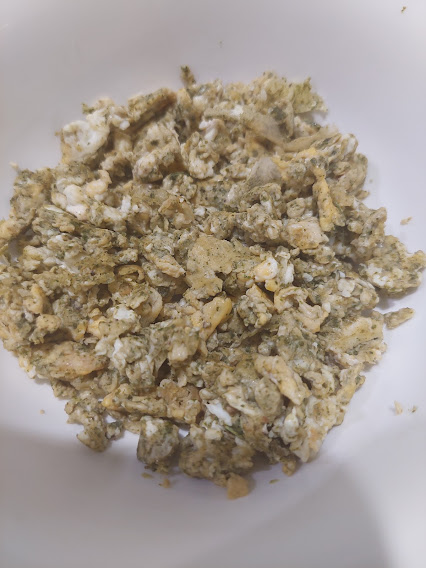
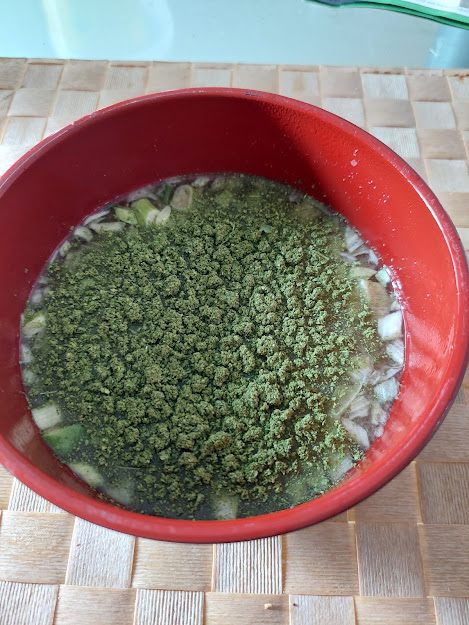
There are many ways to use it. I often mix it with scrambled eggs, spaghetti, curry and rice, miso soup, and papaya salad. I’ve read on the website that it can also be used in desserts, such as mixing it with yogurt, so I’ll definitely give it a try. If you want to take 3g of the powder, it is quite a lot. The taste is not particularly peculiar, but I like to put it on curry to add a unique flavor.
I’ve been eating Moringa powder for about a month now. Is there any change in my body? I haven’t noticed any changes in my body, except for the obvious improvement in my bowel movements. I usually pay a fair amount of attention to my diet. Therefore, I can’t confirm that there is an immediate change in my body just because I ate Moringa. Some people who have continued to eat Moringa have reported that their blood values during medical checkups have improved. I’m looking forward to seeing the results of my next physical examination. My blood values are not bad to begin with, but…
I will continue to take Moringa, taking advantage of the fact that I can get it cheaply at a nearby supermarket. I will report any changes in my body on my blog.
I think I know that it is important to chew my food well, but I don’t practice it at all. I put a lot of food in my mouth at once and swallow it without chewing well. Bread is poured down my throat with milk. Every once in a while, as if remembering, “No, no, no,” I try to chew my food well, but after a while, I am back to normal again.
よく噛むことの効果は、以下の通り言われています。
The benefits of chewing well are said to be as follows
Aids digestion and reduces the burden on the stomach and intestines: Chewing well causes the secretion of fluid, which aids in the digestion and absorption of food. This reduces the burden on the gastrointestinal tract.
Prevents tooth decay and bad breath: Not only does it help with digestion and absorption, but it also prevents the growth of bacteria in the mouth, which helps prevent tooth decay and bad breath.
Brain development: Chewing well increases the amount of blood flowing to the brain. It is said to help children with brain development and adults with memory loss.
I believe that in addition to the above effects, we can express our gratitude to “foods” and “those creators” by chewing well. I want to eat politely and appropriately. I tend to forget to chew well, but I would like to make an effort to make the habit of chewing well my own.
I don’t know how many restaurants there are in the world. I don’t know how many restaurants have regrettably closed their doors in this Covid19 pandemic. Even here in Manila, some of my favorite restaurants was forced to close. I feel really sad. I’m sure there are a lot of restaurants that don’t even know they’re closed. I really hate this Covid19 pandemic.
Today I had a dinner at a nearby restaurant for the first time in more than one month. Since the beginning of August, the restaurants in my area became take-out only. Just recently, municipal relaxed the rule that only fully vaccinated people can eat and drink inside the restaurant, but even then, it is limited to less than 10% of the restaurant’s capacity. Eating and drinking outside the restaurant is also allowed, but it is limited to less than 30% of the restaurant’s capacity, which must be difficult for the restaurant to survive.
I’ve been cooking for myself for over a month, and I realized that I was getting tired of the same old dishes that I always make. Today, I was going to cook something with meat from the freezer and vegetables from the refrigerator, but somehow I lost the will to cook for myself, and I went to a nearby pork cutlet restaurant called “Maisen”.
It’s strange because beer is the same whether I drink it at home or at a restaurant, but somehow it tastes better when I drink it at a restaurant. It’s been a while since I’ve eaten out, so I ordered some things that I wouldn’t normally order. I think I should contribute to the restaurant’s sales even if only a little.
Maybe I don’t need to go out to restaurants every day, but I decided to go to restaurants that I don’t want to be closed in order to help them run. At any rate, I hope that the Covid19 pandemic will be under control and we can all get together and enjoy good food and drink in a normal way.
I don’t consider myself to be a health freak, but I think my blog has posts about moringa, green papaya, that might lead you to believe that. Today is another part of that. It is as the title says. In fact, as you can see in the picture, I’ve been drinking it with grated ginger and calamansi dissolved in hot water along with honey.
Ginger is definitely good for you because it warms the body from the inside, so this is taken when you catch a cold. I believe honey is also a good food for the body. Calamansi is a very popular citrus fruit in the Philippines. I hear that it is also very good for your health.
It’s hard to tell from the picture, both ginger and calamansi are frozen. It is easier to grate them if they are frozen. It is also good to store. I grate both ginger and calamansi with their skins, which I think is also good for health. If I’m wrong, please point it out.
When I drink this hot water, I feel warm, and I think it will keep the covid19 virus away from my body. I also think it may help me getting slim. I really recommend all of you to try it!
When you think about it, eating fruits before they are ripe usually makes you think, “Why don’t you just hold off a little longer? However, when it comes to papayas, I don’t think that idea applies.
There is an enzyme called papain, which, as the name suggests, is attributed to papayas, but this enzyme is found more in green papayas and less in ripe papayas.
Papain is an enzyme that breaks down “protein,” “fat,” and “sugar” at the same time, and is sometimes called the “king of enzymes” because of its resistance to heat.
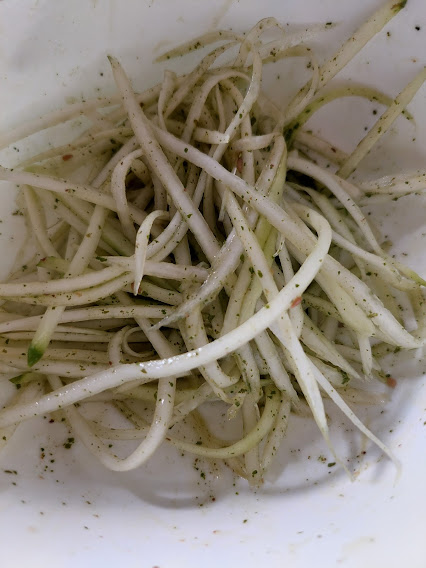
The photo shows a green papaya. It is a rather small green papaya, about 600 grams, and sells for about 60 yen ($0.6). I cut them into strips and eat them like a salad. I have been eating them for over two years now, and I think I have eaten quite a lot of green papayas.
In Thailand, green papayas are used in Som Tam, an essential meal for Thai people. On the other hand, in the Philippines, I have seen that pickled atchara is used as a garnish, however, I think they eat less of it than in Thailand. Green papayas are good for health and are relatively inexpensive, so I hope they will help improve the health of Filipinos.










 Freer than Bird/鳥よりも自由